








3×3 basketball reaching the official status
The majority of people are familiar with classical basketball 5-on-5 on two rims. It’s played on the full court and many people grew out watching big games of this widely known sport. We can call 3×3 some kind of basketball but it has a different background and the history of the development of this sport is drastically opposite.
Rules are the same only on some points as those for 5-on-5 basketball. There was a distinction between street rules and official rules. Street rules were not documented.
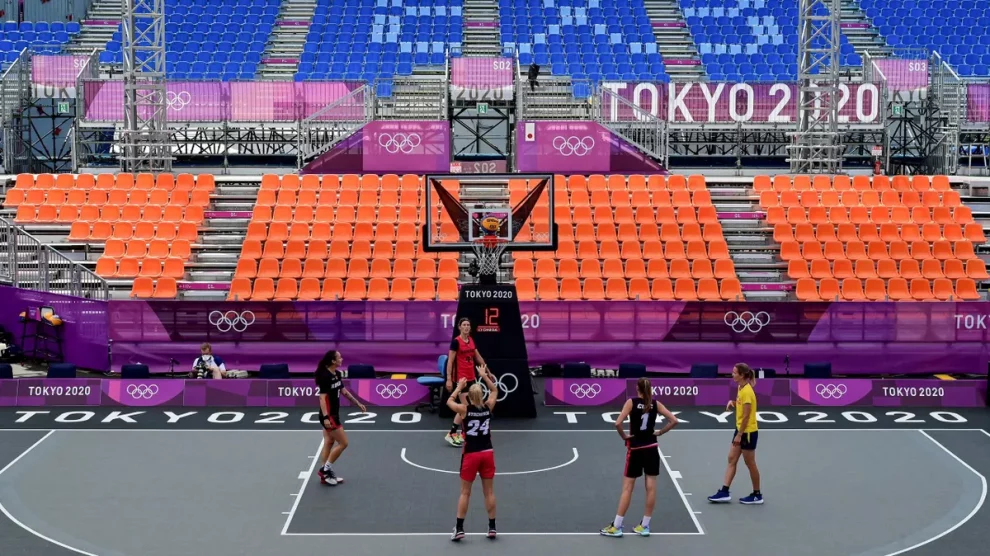
Amongst all, I will state the most important for you. 3×3 basketball utilizes only half of a court and when the team scores they get the ball back. This is the case unless the defense causes a turnover of the offensive team or they rebound the missed shot from an offensive team. After that, the defensive team has to clear the ball (bring the ball outside of the three-point arc to be able to score). The only possible way that the defensive team doesn’t have to clear the ball is when the offense missed the whole basket and backboard entirely with their shot.
If you have a desire in the future to play 3×3 basketball by official rules you would be surprised how much this game evolved regarding regulations. Official regulations didn’t have an influence on the 3×3 basketball until tournaments like Gus Macker and Hoop it Up were not formed. Then they took control over tournaments in 3×3 basketball.
Gus Macker tournaments are spread all over the USA and they include different ages and skill degrees. These tournaments are played on courts in the middle of parking lots and they are played every weekend.
Hoop it up tournaments have started around 30 years ago and since then they established as the biggest 3×3 basketball tour. Hoop it up competitions have millions of participants at a global level and they are considered as root and foundation of modern tournaments.
After being informally played on the streets, basketball 3×3 started getting standardized in the USA. Adidas, which was already connected with street basketball through the famous brand of sneakers Superstar in the 1970s, started launching tournaments in 1992. They also promoted their products during competitions as part of their marketing plan.
The result was the appearance of many tournaments and competitions. The popularity of street basketball grew steadily. A more formal format of this sport was inevitable as consequence. The mainstream point of this sport was somehow predictable back then. Movies from 1992 like Above the Rim and White Man Cannot Jump with basketball themes only contributed to that trend.
FIBA made an institutional version of basketball in 2007 variant developed earlier that year. It was called FIBA 3X3 and it’s played three-a-side, with one backboard and in a half court-format. This version was tested at the 2007 Asian Indoor Games in Macau. That was followed by happenings held in Indonesia and the Dominican Republic in 2008. The sport had its debut at the 2009 Asian Youth Games. Official status was acquired at Summer Youth Olympics in Singapore in 2010.
Differences between Big3 And Fiba
How do those two got their names?
Fiba competitions are simply called 3×3 basketball because that is a variation of basketball played with three players on each side with one blackboard and in a half-court setup.
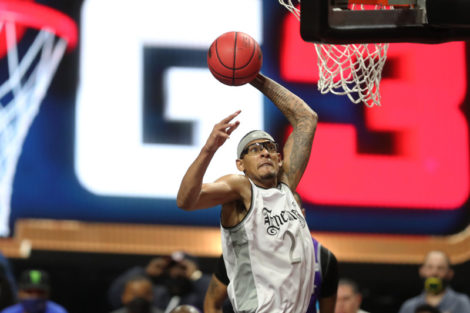
It’s officially called fireball because the kids who played street ball called ball fireball in slang. That name perfectly suits fast pace game in Big3, Ice Cube said.
When the 3×3 game is over?
In Fiba, The game lasts for 10 minutes with sudden death at 21 points. The winner is the first team who reaches 21 points or the team who collected more points over 10 minutes of the game. If there is a draw after 10 minutes, overtime shall be played. The first team who scored 2 points in overtime will be the winner.
In Big3, the first team to reach 50 points gets the win. He must win with at least two points difference because there is no overtime. Halftime occurs when one team reaches 25 points.
How much time is there for making a shot and how the shot is valued?
Every successful shot in FIBA competitions inside the arc gives the team who scored one point, while every successful shot behind the arc is bringing the team two points. Every team has 12 seconds on the clock to make a shot to the basket.
In Big3, the baskets are rewarded with 2 and 3 points like classic basketball field goals. The Big3 has invented also a four-point area on the court and scores from that region are rewarded with 4 points. Every team has 14 seconds on the clock to make a shot
How is the faul sanctioned?
In Fiba, if there is a foul the successful shot made from the field goal, the goal will count and the offensive team gets one free throw. Free throw counts one point. 2 free throws will be rewarded for the 7th team foul. If the shot was realized from inside of an arc is missed, 1 free throw will be awarded, and 2 free throws are awarded on the 7th team foul. Missed shot realized behind the arc will earn 2 free throws. It’s worth mentioning that team is in bonus after it has made 6 fouls. Team fouls 7, 8, and 9 shall be penalized with two free throws. Team foul 10 and every next shall be penalized with 2 free throws and possession.
In Big3 the value of the shot is the same as the value of the awarded free throw for foul and that’s the difference compared to Fiba competitions. When we are talking about free throws, two-point shots are taken from the free throws line, three-point shots from the three-point line, and four-point shots from the four-point circle on the court. There is one extra free throw for the player if he was fouled while making a shot and he scored eventually. The team enters a bonus after a fifth-team foul in each half. After that, the opponent is rewarded after a foul with two one-point free throws and possession of the ball.
How many time-out does one team have?
In Fiba, each team is granted one time-out. There is a rule that time-out should last 30 seconds. Time-out that is not used can be carried to the overtime. The team has a chance to ask for a time-out when the ball becomes dead before a check-ball or free throws.
In Big3, each time has the possibility of taking two timeouts per half. One lasts for 60 seconds and the second one lasts for 30 seconds. If the team doesn’t use a timeout in a respectable time, that timeout cannot be used anymore.
How do the players clear the ball and start the action?
In Fiba, after an unsuccessful attempt on the basket, an offensive player can rebound the ball and can continue to score without clearing the ball. When a defensive player rebounds the ball he must pass or dribble to return the ball behind the arc. If the team blocks or steals the ball, the ball should be returned behind the arc. It should be done by passing or dribbling.
In Big3, the team starts new action with an inbound pass after the opposing team scores. We already stated that in competitions under Fiba there is no inbound pass after the opponent scores. When a player’s shot doesn’t touch the rim, the ball doesn’t have to be cleared by defenders. To remind you, in 3×3 Fiba competitions all defensive rebounds have to be cleared. That is one important distinction. Steals don’t have to be cleared, which is also different from Fiba rule

Add Comment